

Menu
In early May 2025, a 24/7 convenience store chain with more than 500 locations in Vietnam began working with FPT. At that point, the business had less than a month to transition to an electronic invoicing solution for point-of-sale (POS) generated e-invoices per the tax department’s requests, with the transition required to be completed before June 1, 2025. The tight timeline was only half the problem. The solution provided by the retailer’s previous vendor could not accommodate the new invoicing requirement, forcing the company to switch providers while operations were ongoing. Every day, the system still had to issue around 250,000 invoices, averaging more than 10,000 per hour, from POS terminals across the country. For a retailer, invoicing cannot simply pause while the new system is ready: customers continue making purchases, POS systems must continue issuing invoices, and the retailer’s tax compliance obligations remain unchanged.
When Automated Sales Data Could Not Yet Be Inputted into the New System
The project’s challenges stemmed from the close interdependence between the retailer’s sales systems and its electronic invoicing processes. Across approximately 20 branches, hundreds of stores, and numerous POS terminals, the company handled multiple types of invoices and supporting documents, including POS-generated e-invoices, VAT invoices, goods delivery notes, and other documents serving different business processes. Switching providers therefore required the new platform to accommodate multiple data flows and processing workflows, rather than simply replace a standalone invoice issuance tool.
Meanwhile, the retailer’s sales systems could not immediately connect to FPT.eInvoice. Without an automated data flow in place, an alternative process was needed to handle transactions originating at the stores while ensuring the accuracy, completeness, and consistency of invoice data.
From Transition to Operations: How FPT And The Retailer Helped Address Each Implementation Challenge
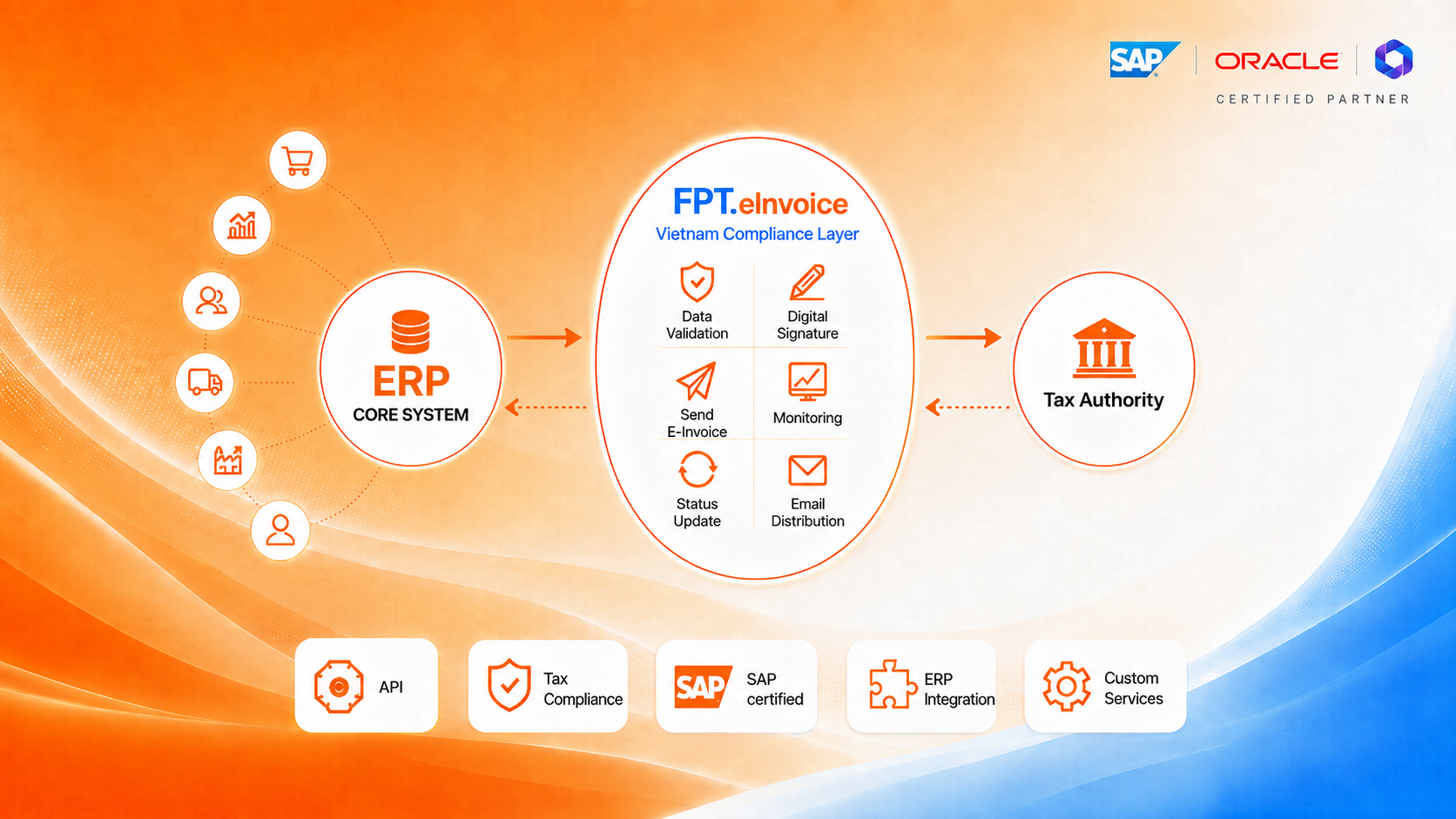
After evaluating several connection methods, FPT and the chain agreed on API integration to connect FPT.eInvoice with the existing sales systems and enable automated invoice issuance. However, completing the integration would take approximately one to two weeks, while the retailer still had to issue invoices for its daily transactions. The transition to the new platform therefore could not depend entirely on the completion of the technical connection.
To maintain invoice issuance during this period, a manual invoice issuance process was implemented through FPT.eInvoice in approximately one week. This interim arrangement required considerable effort, as activities normally handled through automated data flows now involved additional procedures and verification. FPT’s team worked directly with the retailer throughout the invoice issuance process, helping resolve operational issues and carry out the necessary procedures with the tax department during the provider transition. Meanwhile, technical integration continued in parallel, allowing both parties to maintain invoicing operations while progressively completing the new system.
During integration, FPT worked with the retailer’s technical team to establish the API connection and transition from manual to automated invoice issuance. Beyond connecting the systems, both parties coordinated to address issues arising from existing infrastructure and operational processes, ensuring the new solution could accommodate POS-generated electronic invoices, VAT invoices, and related documents. By May 31, 2025, integration had been completed and FPT.eInvoice officially went live, allowing the retailer to meet the tax department’s deadline.
The new platform supported POS-generated electronic invoices, which the previous solution could not accommodate, while also handling the different data flows required by the retailer’s business operations. Following the transition, the platform handled an average of approximately 250,000 invoices per day. During the initial post-launch period, FPT continued working closely with the retailer to reconcile invoice data daily through multiple channels to verify the completeness of issued invoices, and address operational issues as they arose, while also helping stabilize invoicing processes on the new platform.

Beyond the Solution: Why Implementation Capability Matters
For businesses with high transaction volumes and complex operating environments, selecting an electronic invoicing platform that meets functional and technical requirements is only part of the challenge. Equally important is assessing, from the outset, whether the solution can be implemented, particularly when the transition must be completed within a limited timeframe while business activities continue. Beside software capabilities, businesses should evaluate the proposed transition method, the provider’s support resources, and how parties will coordinate when unexpected issues arise. These factors can directly influence the implementation progress and the practical application of the new system.
The FPT.eInvoice implementation for a 24/7 convenience store chain demonstrates how the approach to managing a system transition can make a difference in projects facing tight deadlines and continuous operational requirements. By maintaining an interim invoice issuance process alongside API integration, supporting tax authority procedures, and conducting daily data reconciliation after go-live, FPT helped the retailer transition to the new platform without waiting for all technical integration work to be completed. This was also the value FPT brought to the project: not only providing a solution that met the retailer’s business requirements, but also developing an implementation approach tailored to the customer’s actual operational constraints.