

Menu
- Vietnam: a continuously changing compliance landscape
- SAP S/4HANA: strong in complex manufacturing and supply chain environments
- Oracle Fusion Cloud ERP: when financial management and control are the focus
- Microsoft Dynamics 365 Finance and Supply Chain Management: an advantage for companies deeply invested in the Microsoft ecosystem
- Infor CloudSuite: identify the right product before evaluating
- NetSuite: strong for multi-subsidiary models, with greater reliance on extensions
- When ERP crosses borders, the difficult part often sits outside the core system
- FPT.eInvoice: connecting local e-invoicing requirements with the ERP core
- Conclusion: a good ERP is not one that does everything
For companies operating across multiple countries, ERP is often the core system used to standardize finance, procurement, manufacturing, supply chain operations and data across business units. But a system designed to standardize operations across markets has a natural limitation: not every country-specific requirement can be embedded in the ERP core.
This gap is particularly relevant in markets where tax, invoicing, accounting and reporting requirements change quickly. If local systems are not well integrated with the group ERP, companies may face duplicate data entry, manual reconciliation and inconsistent data across systems
Vietnam: a continuously changing compliance landscape

Electronic invoices and electronic documents alone have undergone several significant changes within a relatively short period.
Decree No. 70/2025/NĐ-CP, effective from June 1, 2025, amended 40 of the 61 articles of Decree No. 123/2020/NĐ-CP, including provisions on the timing of invoice issuance, information required on invoices and cases involving the use of electronic invoices.
From July 1, 2026, Decree No. 254/2026/NĐ-CP and Circular No. 91/2026/TT-BTC also took effect, providing further guidance on new requirements for electronic invoices and electronic documents under the Law on Tax Administration No. 108/2025/QH15.
For multinational companies, this creates a dual challenge: their systems in Vietnam must change quickly enough to comply with domestic regulations, while data and processes must remain aligned with the group’s management standards.
The question when selecting an ERP, therefore, is not only “Which system is the strongest?” It is also which system best fits the way a company operates and how easily that system can adapt when deployed in different markets.
SAP S/4HANA: strong in complex manufacturing and supply chain environments
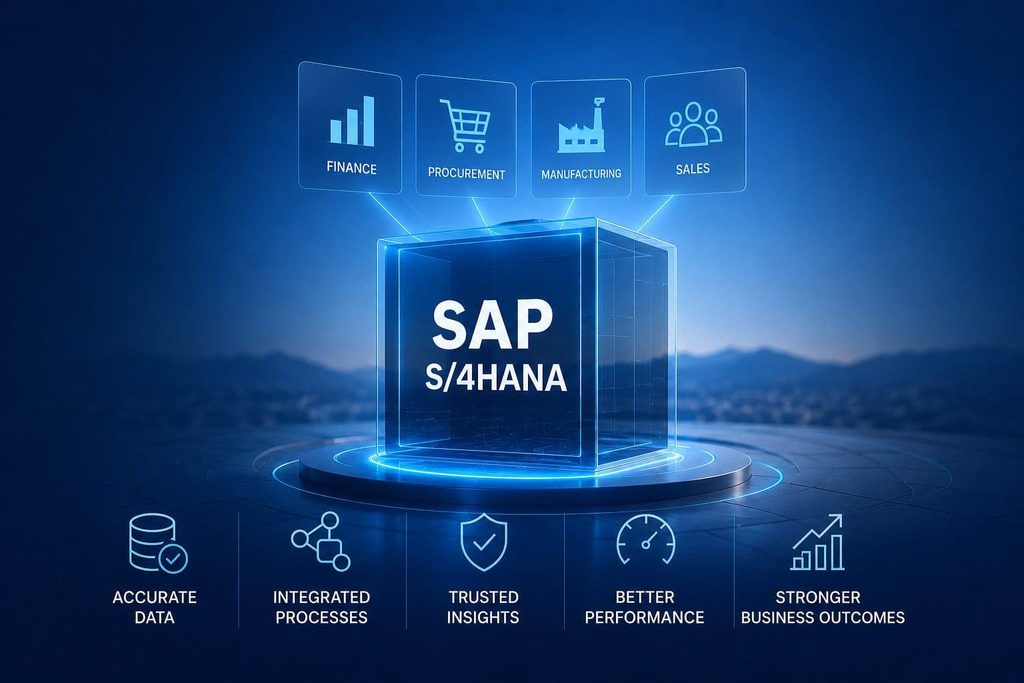
SAP S/4HANA is well suited to companies whose operations closely connect planning, materials management, manufacturing, quality management, inventory and finance.
SAP supports multiple production models, from discrete manufacturing and process manufacturing to repetitive manufacturing. It also provides industry-specific solutions for sectors including automotive, retail, fashion, mining and other manufacturing industries.
SAP’s strength lies in its ability to bring complex processes into a unified system. Companies can view demand, production capacity, inventory and execution progress within a continuous data flow rather than managing each stage separately.
The main consideration stems from that same depth. When a company operates multiple plants and subsidiaries under a global process template, country-specific changes need to be designed in a way that does not disrupt the shared system. The challenge is therefore not only software configuration.
Companies also need to decide which requirements should remain within the ERP core and which should be handled through a separate layer. Costs, implementation time and resource requirements can also increase significantly when the functional scope and degree of system integration grow. Project teams need not only strong IT capabilities, but also effective data governance and process change management.
Oracle Fusion Cloud ERP: when financial management and control are the focus
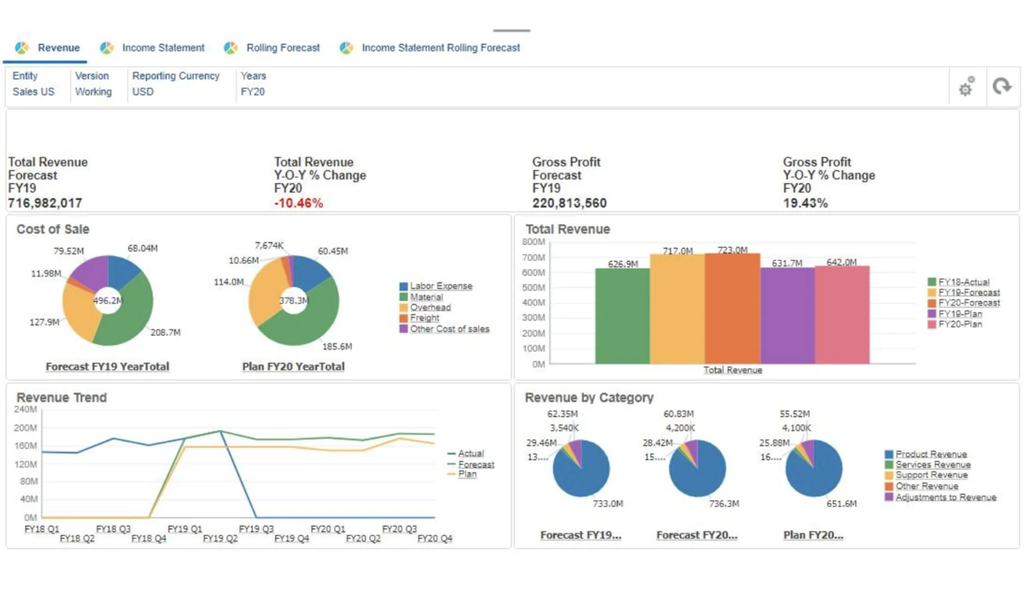
Oracle Fusion Cloud ERP is suited to companies that need to manage finance across multiple companies, business units, currencies and accounting standards.
Oracle Fusion Cloud Financials supports operations across multiple legal entities and currencies, as well as multiple accounting standards on the same platform. The broader Fusion ERP suite also connects procurement, project management, risk management and enterprise performance management. For companies with more extensive manufacturing and supply chain requirements, Oracle provides Fusion Cloud Supply Chain and Manufacturing, covering functions from planning, manufacturing and inventory to warehousing and transportation.
One point companies need to consider is that the implementation scope should be defined clearly from the outset. “Oracle Fusion” does not mean that every requirement related to finance, manufacturing and localization is included in a single package. Oracle’s own documentation includes mechanisms such as Regional Localization and Localization System Options, which enable country-specific functionality that Oracle has already provided for individual countries or business units.
Portugal’s ATCUD is one example. Oracle provides the functionality, after which the implementation team enables and configures it for the relevant business unit. This illustrates that localization is managed as a separate layer rather than assuming that every regulatory requirement in every country is included by default in the ERP core.
Microsoft Dynamics 365 Finance and Supply Chain Management: an advantage for companies deeply invested in the Microsoft ecosystem
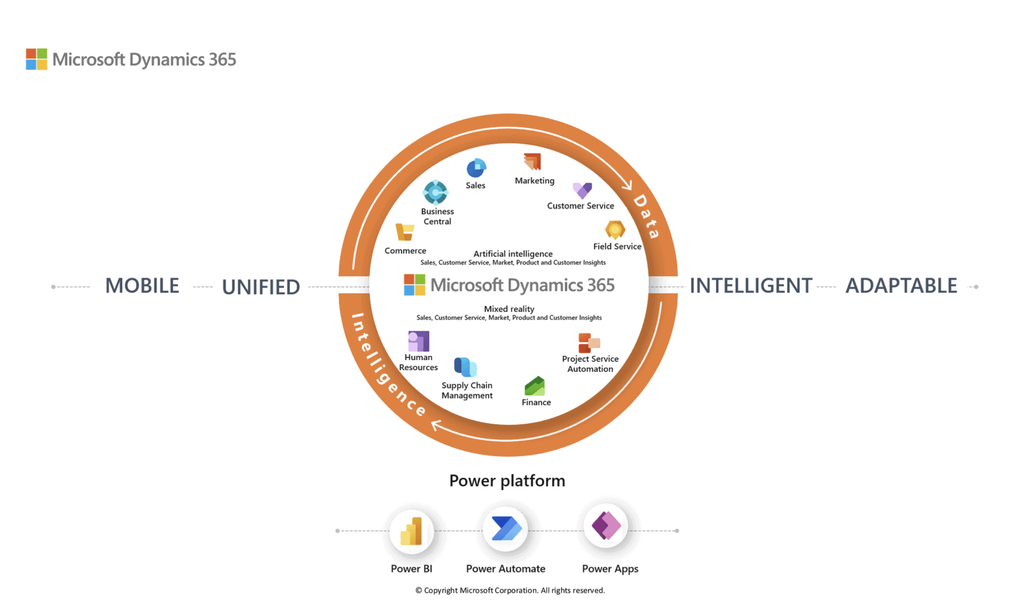
Dynamics 365 Finance focuses on financial operations at a global scale, while Dynamics 365 Supply Chain Management adds processes for procurement, inventory, manufacturing and logistics.
For companies already using Microsoft extensively, a major advantage is the ability to place ERP within the same ecosystem of enterprise applications and data.
Microsoft’s approach to country-specific requirements is also relatively flexible. Globalization Studio brings together capabilities including Electronic Reporting, Tax Calculation and Electronic Invoicing. Microsoft also provides localization content for multiple countries and allows partners or customers to extend that functionality when needed.
Malaysia provides a specific example. Dynamics 365 Finance currently supports the creation, signing and submission of electronic invoices directly to the Inland Revenue Board of Malaysia, or IRBM, through MyInvois. Companies must configure digital certificates, access credentials and invoice sending and receiving workflows within the system.
However, because the scope of localization support varies by country, multinational companies cannot assume that one configuration can be applied unchanged across all markets.
Infor CloudSuite: identify the right product before evaluating
Infor CloudSuite is not a single ERP system.
Infor M3 is designed for manufacturing and distribution companies, with particular strengths in industries such as food and beverage, chemicals, fashion, distribution, equipment and industrial manufacturing.
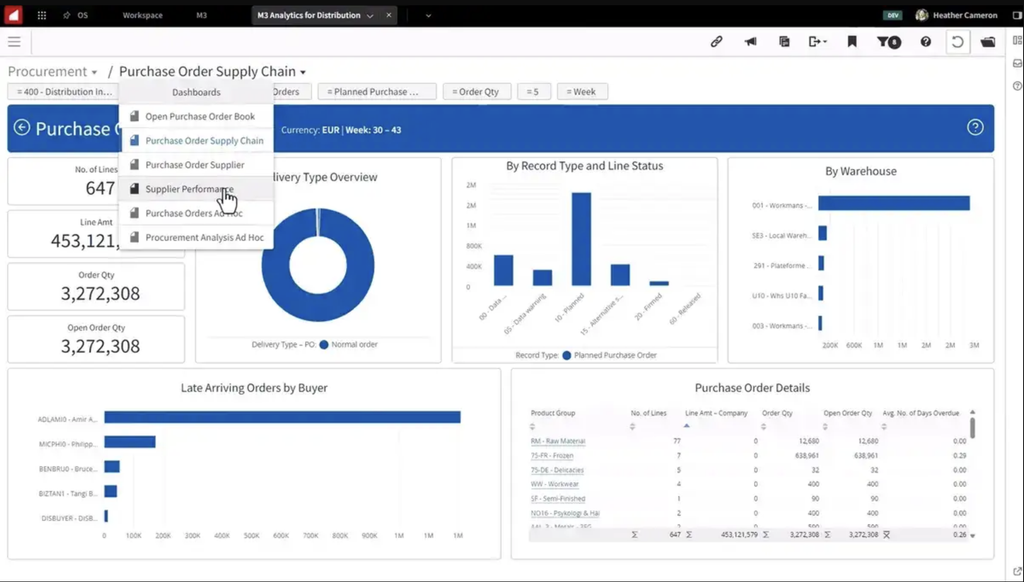
Infor LN, meanwhile, is geared more heavily toward complex manufacturing, project-based manufacturing, engineer-to-order operations, aerospace and defense, automotive and industrial manufacturing.
This is both a strength and a point companies need to consider. A business can choose a system designed in considerable depth for its industry, but it cannot simply ask whether “Infor supports process X” without first identifying whether the relevant product is LN, M3 or a specific CloudSuite. This distinction becomes even more important for country-specific requirements. In Malaysia, for example, Infor LN includes dedicated electronic invoicing functionality and requires companies to configure data such as industry codes, tax identification numbers and invoice settings before use.
NetSuite: strong for multi-subsidiary models, with greater reliance on extensions
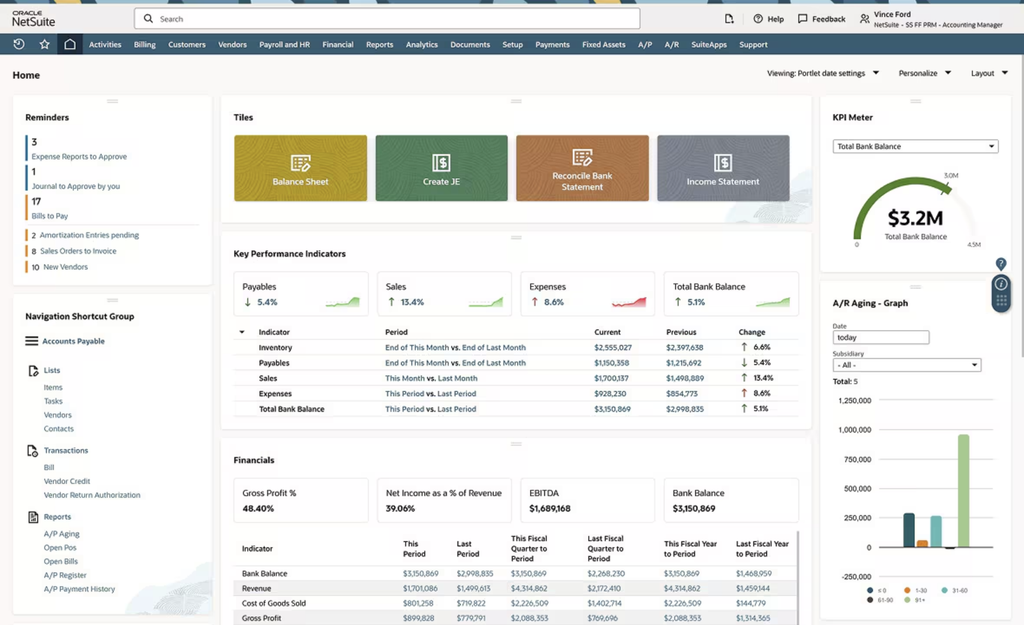
NetSuite OneWorld is designed to manage multiple subsidiaries, business units and legal entities across countries within a single system. It also supports financial consolidation, multiple currencies and group-level reporting.
For companies expanding rapidly across multiple markets, this is a significant advantage: they do not necessarily need to deploy a completely separate ERP system for every subsidiary.
However, some of NetSuite’s country-specific functionality is delivered through SuiteApps rather than being fully embedded in the ERP core. Malaysia provides a clear example. NetSuite offers the Malaysia Electronic Invoicing SuiteApp, but electronic document transmission to the IRBM uses Avalara as an intermediary. Companies also need to configure Avalara in MyInvois and meet the relevant licensing requirements. When evaluating NetSuite, companies therefore need to consider the broader extension ecosystem, not only the list of capabilities in the core ERP.
When ERP crosses borders, the difficult part often sits outside the core system
The five systems above take different approaches, but they illustrate the same point: the core ERP does not necessarily need to handle every country-specific business process itself. Some functions are built in by ERP vendors. Some are enabled and configured on a country-by-country basis. Others are handled through add-on applications, intermediaries or local service providers.
Malaysia shows these differences clearly. Dynamics 365 provides a direct connection to MyInvois. Infor LN includes electronic invoicing functionality for Malaysia. NetSuite uses a SuiteApp together with Avalara.
Vietnam follows a similar pattern. The important question is therefore not whether a company needs an additional system outside the ERP. What matters more is whether that additional layer is integrated tightly enough to prevent duplicate data entry, avoid broken processes and allow the ERP to remain the primary system of record for core financial and operational data.
This is also a challenge that real-world ERP projects in Vietnam need to address.
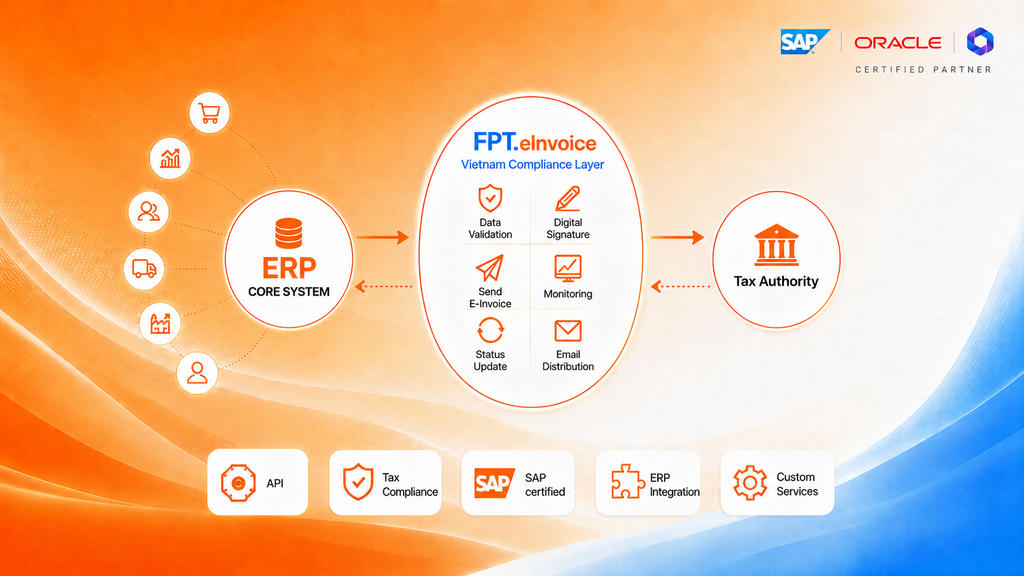
With extensive experience and a team of experienced specialists, FPT has implemented SAP S/4HANA together with complementary solutions such as electronic invoicing, banking and business applications for multiple enterprises. This approach integrates satellite solutions around the ERP core, limiting the need to place every country- or process-specific requirement directly inside the core system.
FPT.eInvoice: connecting local e-invoicing requirements with the ERP core
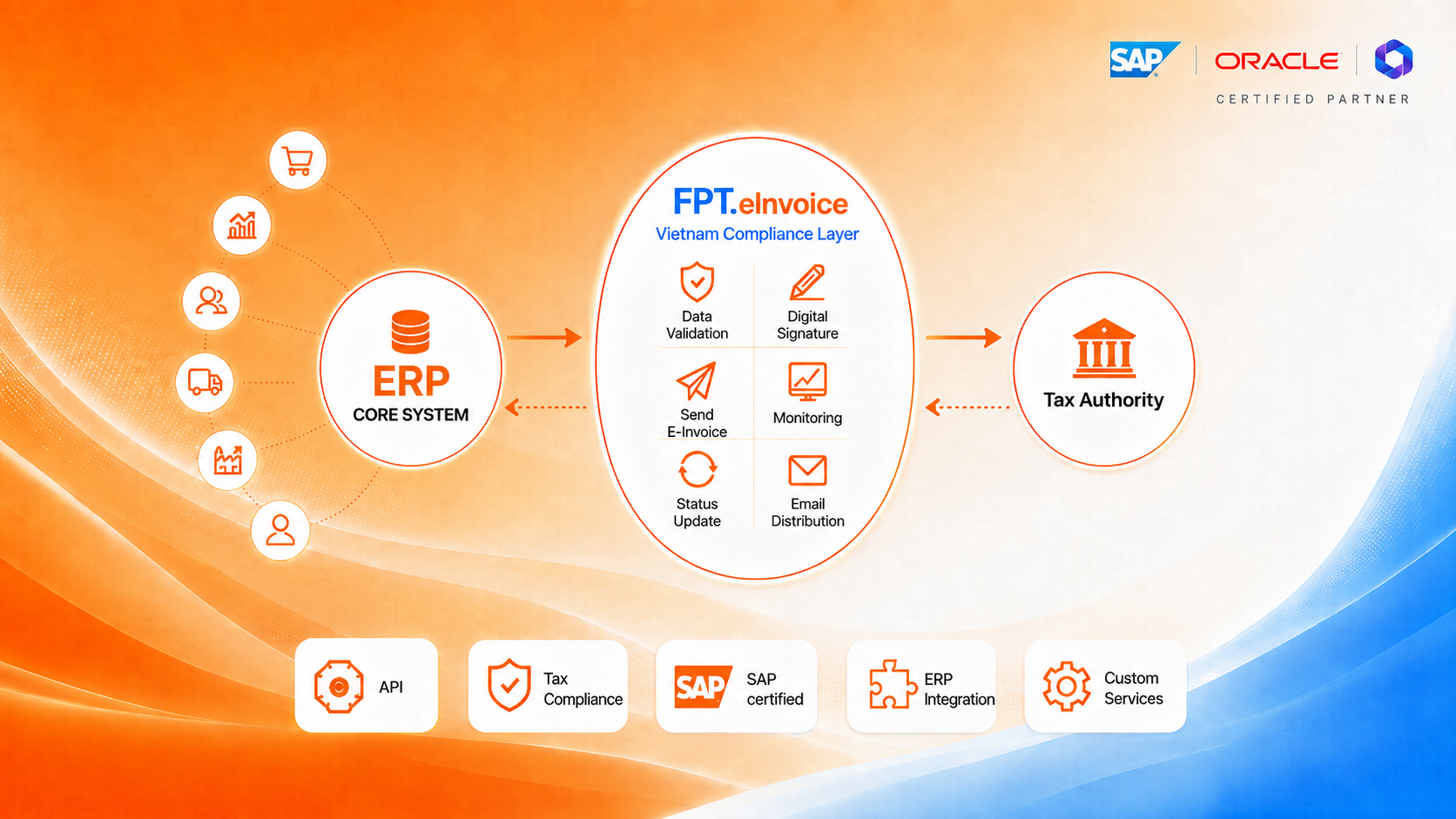
For electronic invoicing specifically, FPT.eInvoice has been recognized by SAP as the first partner in Vietnam to fully meet all technical and legal requirements to be listed among the e-invoicing solution providers integrated into the SAP Document and Reporting Compliance system. FPT.eInvoice has been integrated directly with SAP in projects such as GONSA and Quang Minh Seafood to handle e-invoice generation, digital signing, invoice transmission and storage without replacing the core SAP system.
Similar experience is being extended to Malaysia, where FPT.eInvoice has also been recognized as meeting LHDN/IRBM requirements. The solution can be deployed on-premises or in the cloud and integrated with ERP systems, accounting software and sales systems.
The important point in both markets is not that a local product replaces a global ERP. It is how responsibilities are divided between the ERP core and the local business process layer. The ERP continues to manage transaction processing, financial operations and enterprise data according to enterprise standards. Local layers handle country-specific requirements such as electronic invoicing, digital signatures, tax, accounting or connections to regulatory authorities.
The two need to be integrated so that the resulting data ultimately flows back into the same management system.
Conclusion: a good ERP is not one that does everything
SAP, Oracle, Dynamics 365, Infor and NetSuite cannot be judged as better or worse simply by the number of features they provide.
A multi-plant manufacturer may need the process depth offered by SAP or Infor. A group that puts finance and multi-entity control at the center may prioritize Oracle. Companies that have already built their technology environment around Microsoft have different reasons to choose Dynamics 365. NetSuite addresses multi-subsidiary management effectively on a cloud platform.
But even after choosing the core ERP, one question is often overlooked: When a company enters a new market, which requirements are already supported by the ERP, which require additional configuration, and which should be handled by a local solution? That is ultimately what determines whether a global ERP system can operate smoothly at the local level